
By Jenni Trent Greenman
Bullying is an unfortunate reality that many of us face, most often during our school years. While it was once dismissed as just “kids being kids,” we now understand the serious, long-term consequences bullying can have on a child’s mental health and self-worth.
And with technology now embedded in nearly every aspect of our lives, bullying has taken on new forms. From the schoolyard to smartphones, it’s more important than ever for parents to talk openly with their children about what bullying is, why it’s never the victim’s fault, and how to deal with it effectively.
Real-Life Bullying
Bullying often comes from peers or even so-called friends.
Common behaviours include:
- Verbal insults or threats (in person or through others)
- Physical aggression (pushing, shoving, hitting)
- Yelling or intimidation
- Destroying or stealing personal items
- Spreading rumours or lies
While many still picture the “classic” playground bully demanding lunch money, modern bullying is more complex—and just as damaging. Children should understand that those who bully often struggle with expressing negative emotions and may be deeply unhappy themselves. However, this never excuses their behaviour.
Key message:
Your child must know that it’s not their fault. If they are being bullied, they must tell a trusted adult—be it a parent, teacher, relative, or school counsellor. If there is any physical aggression, it should be reported immediately.
Bullying From Friends
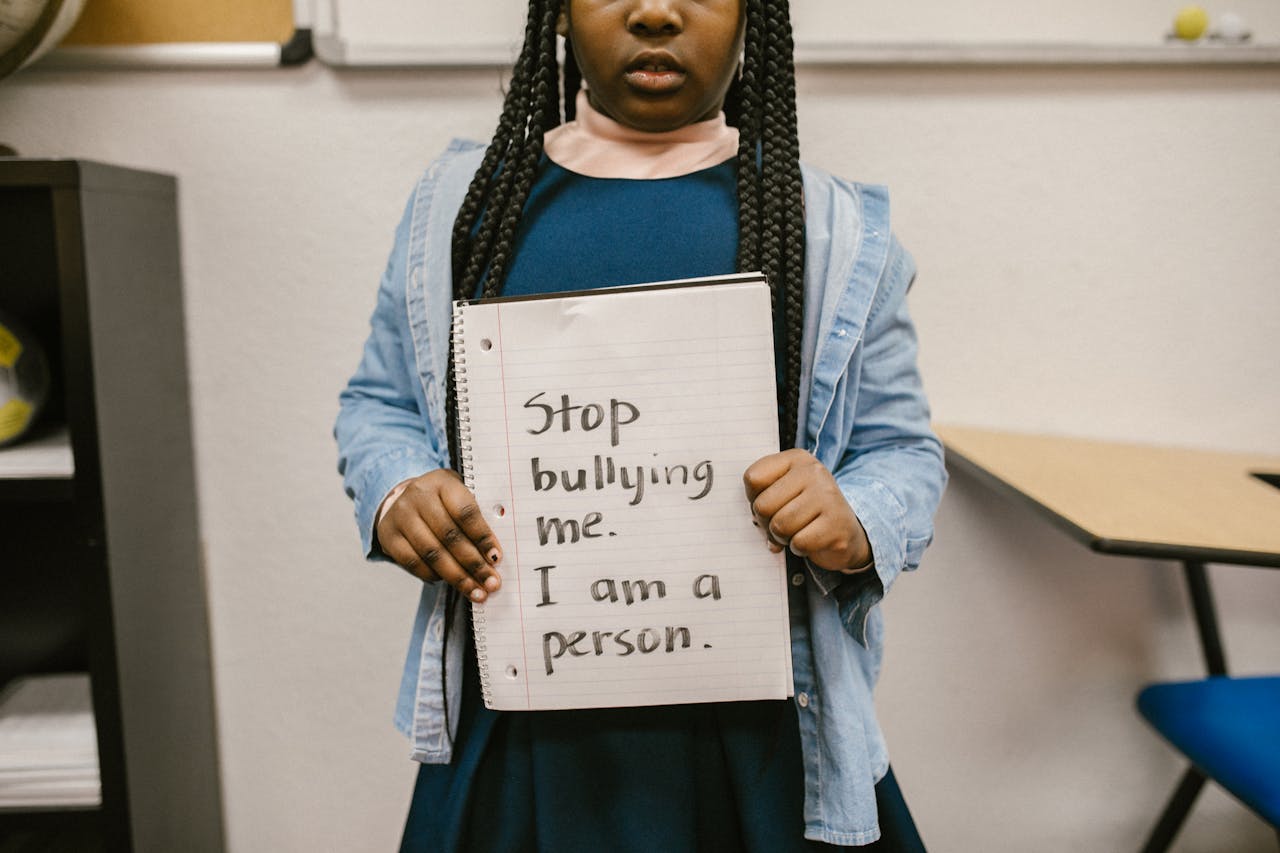
Bullying isn’t always obvious or from people your child dislikes. It can come from within their own friend group.
Signs include:
- Constant teasing or “jokes” at their expense
- Unreasonable demands or “tests” of loyalty
- Public humiliation
- Exclusion or silent treatment
- Taking money or possessions
- Group mockery
It’s essential to teach your child that friendship is no excuse for bullying. While some gentle teasing is normal among peers, there’s a line where it becomes harmful. If a friend is consistently making them feel small, unsafe, or embarrassed, that’s bullying, not banter.
Cyberbullying

Technology has given bullies a new platform. Social media, messaging apps, and online games are often misused to harass or humiliate peers, sometimes anonymously.
Cyberbullying may include:
- Insulting or threatening messages
- Posting private or manipulated photos/videos
- Spreading false information
- Public shaming or exclusion in online groups
- Persistent trolling or harassment
This is often done by children your child knows, emboldened by the distance and anonymity of screens. Make it clear to your child: online bullying is just as serious—and just as wrong—as anything that happens in person.
Stranger Danger Online

While bullying usually comes from people your child knows, the internet brings an added layer of risk: strangers who target young users online.
Red flags include:
- Aggressive or inappropriate private messages
- Threats, including to harm or locate your child
- Requests for personal information or money
- Inappropriate photo/video demands (grooming)
Your child must understand that online “stranger danger” is real. They should never engage with people they don’t know and should always report disturbing interactions to an adult.
What Parents Can Do

Now that we understand the risks, what practical steps can parents take?
- Talk Early and Often
Start conversations about bullying before it happens. Explain what it is, what it feels like, and that it’s never okay. Let them know they can always talk to you about anything. - Encourage Reporting
If your child is being bullied, they should tell a trusted adult immediately—be it a teacher, school counsellor, parent, or sibling. Keeping it to themselves only increases the harm. - Involve the School
Don’t hesitate to contact the school or playgroup. Most schools have anti-bullying policies in place and should act to protect your child. - Avoid Retaliation
Encourage your child not to retaliate, either verbally or physically. Not only can this escalate the situation, but it may also result in your child being blamed. Instead, they should calmly remove themselves and report the incident.
Why It Matters
Bullying doesn’t simply go away if ignored. In fact, it can intensify, especially online. From name-calling to serious threats, kids today are exposed to bullying in more ways than ever before.
That’s why it’s so important to equip them with the tools to recognise, resist, and report abusive behaviour, whether it comes from classmates, “friends,” or strangers. With your support, your child can feel safe, heard, and empowered.